
What Is a K-Beauty Routine? A Beginner's Guide

TL;DR:
The K-beauty routine emphasizes gentle layering, hydration, and long-term skin health over quick fixes.
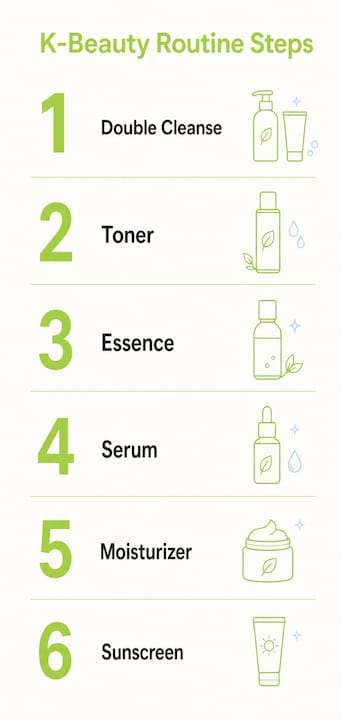
A typical daily regimen includes 4–5 steps like double cleansing, toning, treatment, moisturizing, and sun protection.
The K-beauty routine is defined as a flexible, multi-step Korean skincare regimen built on gentle layering, deep hydration, and long-term skin health rather than quick cosmetic fixes. Most people picture the famous 10-step version, but the practical daily regimen runs closer to 4–5 steps: double cleansing, toning, treatment, moisturizing, and sun protection. The philosophy behind K-beauty treats skincare as prevention, not correction. That distinction separates it from most Western approaches, which tend to favor stronger actives and faster visible results over barrier preservation.
What is a K-beauty routine and what are its core steps?
The essential Korean skincare routine consists of 4–5 core steps: double cleansing, toner, a treatment layer, moisturizer, and sun protection. A morning routine takes about 5 minutes. An evening routine runs 10–15 minutes when optional treatments are included. That time investment is far lower than most beginners expect.
Double cleansing
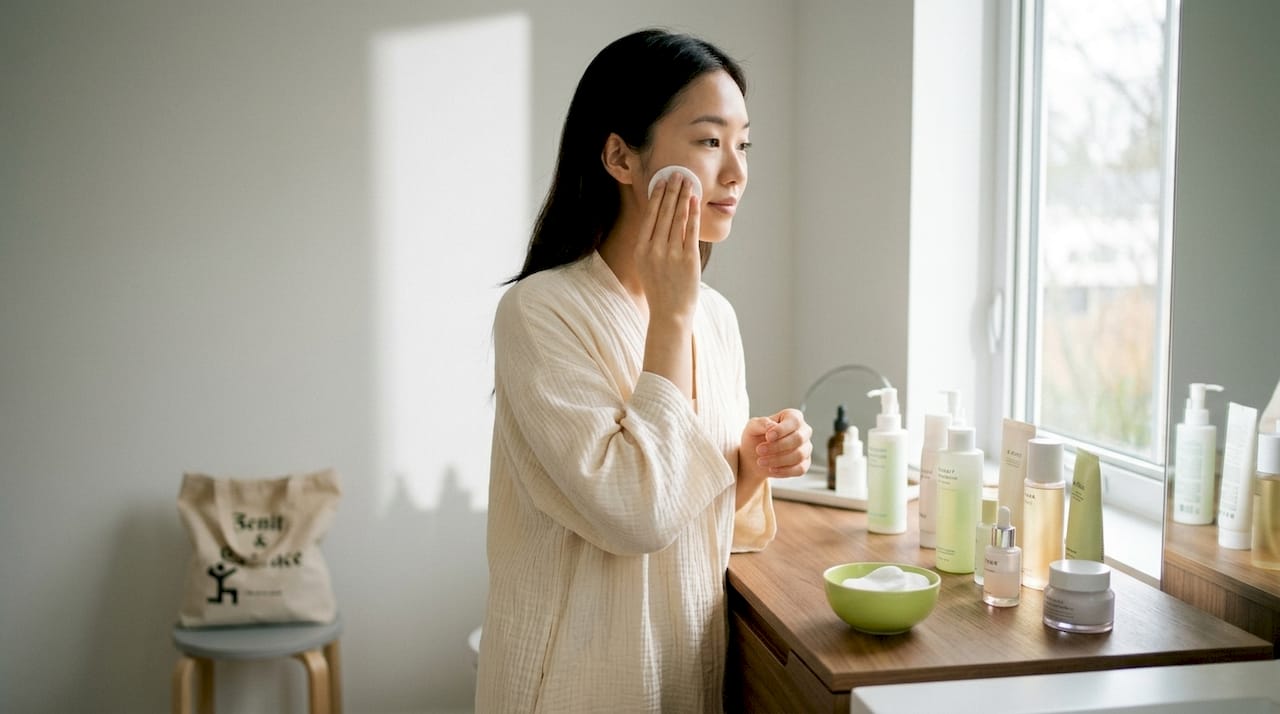
Double cleansing starts with an oil-based cleanser, then follows with a water-based one. The chemistry behind oil cleansers allows them to dissolve sunscreen and sebum more effectively than water alone, without stripping the skin barrier. A gentle water-based cleanser with a pH of 4.5–5.5 then removes any remaining residue. Low-pH formulas reduce barrier disruption compared to alkaline bar soaps. Even oily and acne-prone skin benefits from a non-comedogenic oil cleanser in the first step.
Toner, essence, and serum
Korean toners differ sharply from Western ones. They contain hydrating ingredients like hyaluronic acid and Centella asiatica instead of alcohol, and they restore skin’s moisture balance after cleansing. An essence is a lightweight, watery treatment that preps skin for better absorption of what comes next. Serums carry higher concentrations of active ingredients like niacinamide or vitamin C. Layering these products from thinnest to thickest texture maximizes absorption and keeps irritation low.
Pro Tip: Apply toner while your skin is still slightly damp from cleansing. The residual moisture helps the toner absorb faster and more evenly.
Moisturizer and sunscreen
Moisturizer seals in all the hydration built up through the previous steps. In the morning, sunscreen is the non-negotiable final step. Korean sunscreens use advanced UV filters that absorb quickly and avoid white cast, making them far more wearable than many Western formulas. Skipping SPF undermines every other step in the routine.
Optional steps include:
Exfoliation: 1–2 times per week using a chemical exfoliant or a tool like Japanese exfoliating sponges to remove dead skin cells gently
Sheet masks: Used 1–3 times weekly as an occlusive barrier that locks in moisture and active ingredients when skin needs an extra boost
Eye cream: Applied before moisturizer to address the delicate under-eye area with targeted ingredients
How does the 10-step K-beauty routine differ from the daily regimen?
The 10-step routine is a flexible menu, not a mandatory daily checklist. Most people who follow K-beauty do not perform all 10 steps every day. That distinction matters because the fear of a 10-step commitment stops many beginners before they start.
The daily essentials are:
Oil cleanser (PM only)
Water-based cleanser (AM and PM)
Toner (AM and PM)
Moisturizer (AM and PM)
Sunscreen (AM only)
Occasional treatments like exfoliation, sheet masks, and targeted serums slot in based on what your skin needs that day or week. Retinoids, for example, should be limited to 3–5 times per week to avoid irritation. Exfoliation more than twice a week risks weakening the skin barrier rather than improving it.
Skin type, climate, and season all shape which steps you use. Oily skin in summer calls for a lighter moisturizer and possibly no essence. Dry skin in winter benefits from adding a hydrating serum and a richer cream. The routine adapts to you, not the other way around.
Pro Tip: Run a morning routine and an evening routine as two separate mental checklists. Morning focuses on protection. Evening focuses on repair and hydration.
What benefits does the K-beauty approach offer?
K-beauty prioritizes preventive care, maintaining skin barrier health through hydration and gentle layering rather than aggressive correction. This approach reduces the risk of irritation and inflammation that often comes with Western skincare models built around strong actives like high-percentage acids or prescription-strength retinoids.
The ingredient philosophy is notably different. Korean skincare emphasizes humectants and lightweight layering, which leads to better moisture retention and less irritation than many Western treatments. Centella asiatica calms inflammation. Snail mucin supports skin repair and hydration. Niacinamide brightens and tightens pores. These ingredients work gradually and gently, which suits sensitive and reactive skin types especially well.
“K-beauty’s focus on slow aging versus aggressive correction aligns with preserving skin barrier integrity and preventing inflammation. The goal is skin that stays healthy for decades, not skin that looks temporarily corrected.”
Korean sunscreens represent one of the clearest product advantages. They use UV filter technologies not yet approved in the United States, resulting in formulas that feel like skincare rather than sunscreen. That wearability means people actually apply them daily, which is the only way SPF delivers its benefits.
The table below compares the core philosophy differences between K-beauty and conventional Western skincare:
Feature | K-beauty approach | Western skincare approach |
Core goal | Prevention and barrier health | Correction and visible results |
Cleanser pH | Low pH (4.5–5.5) | Often alkaline (7+) |
Active ingredient strength | Low to moderate, layered gently | Often high concentration |
Toner purpose | Hydration and pH balance | Astringent or exfoliating |
Sunscreen texture | Lightweight, cosmetically elegant | Often heavy or greasy |
The role of antioxidants in K-beauty is also worth noting. Vitamin C serums and green tea extracts appear frequently in Korean formulas, protecting skin from environmental damage while supporting collagen production over time.
How can beginners start a K-beauty routine?
Consistency outperforms complexity every time. A 4-step daily regimen practiced consistently produces better results than an occasional 10-step routine. Beginners should start with three steps and build from there.
The starting three:
Cleanser: A gentle, low-pH water-based formula suited to your skin type
Moisturizer: A lightweight gel for oily skin or a cream for dry skin
Sunscreen: A Korean-formula SPF 30 or higher applied every morning
Once those three feel natural, add a toner. Then introduce one active ingredient, such as niacinamide or a vitamin C serum, and observe how your skin responds over 2–3 weeks before adding anything else. Introducing actives one at a time prevents the guesswork of figuring out what caused a reaction.
Skin type shapes every product choice. Oily skin benefits from gel textures and water-based moisturizers. Dry skin needs richer creams and extra hydrating layers. Sensitive skin should avoid fragrance and stick to minimal ingredient lists, especially when starting out.
Pro Tip: Patch test any new product on your inner forearm for 24 hours before applying it to your face. This one step prevents most adverse reactions.
Sheet masks and exfoliation are treats, not requirements. Use a sheet mask when your skin feels stressed or dull, not as a daily ritual. Incorporate affordable skincare solutions that align with your skin’s actual needs rather than buying every product category at once. Building slowly keeps your skin stable and your budget intact.
Key Takeaways
The K-beauty routine works because it prioritizes skin barrier health, gentle hydration, and consistent prevention over aggressive correction or complex daily rituals.
Point | Details |
Core routine is 4–5 steps | Double cleansing, toner, treatment, moisturizer, and SPF cover the daily essentials. |
10-step is a menu, not a mandate | Most people adapt the full routine to 4–5 daily steps based on skin needs and lifestyle. |
Prevention beats correction | K-beauty reduces irritation risk by using low-pH cleansers, gentle actives, and hydrating layers. |
Sunscreen is non-negotiable | Korean SPF formulas absorb quickly and layer well, making daily use practical and effective. |
Consistency beats complexity | A simple 4-step routine practiced daily outperforms an occasional 10-step routine every time. |
Why I think the 10-step myth is the biggest barrier in K-beauty
The single most damaging idea in K-beauty is that you must do all 10 steps every day. I’ve watched people buy a full product lineup, feel overwhelmed by the routine within a week, and quit entirely. That outcome is the opposite of what K-beauty actually teaches.
The real philosophy is about listening to your skin. Some mornings, cleanser, moisturizer, and SPF are all your skin needs. Some evenings, a double cleanse, a serum, and a rich cream are exactly right. The routine shifts with the season, your stress level, and what your skin is telling you. Treating it as a fixed checklist misses the point entirely.
Product quality matters far more than product quantity. One well-formulated toner with hyaluronic acid and Centella asiatica does more than three mediocre ones layered together. I’d rather see someone use three excellent products consistently than rotate through ten average ones. The core skincare concepts behind K-beauty reward patience and attention, not spending.
Seasonal adjustment is something most beginners overlook. Your summer routine should not look identical to your winter routine. Lighter textures in humidity, richer layers in cold and dry air. That flexibility is built into K-beauty by design, and using it is what makes the approach sustainable long term.
— Norman
Essencezenith’s picks for building your K-beauty routine
Building a K-beauty routine does not require a large budget or a complicated product lineup. Essencezenith curates sustainable beauty essentials that align with K-beauty’s core principles: gentle formulas, quality ingredients, and products that support your skin rather than stress it.

Every product in the Essencezenith collection comes with a 30-day satisfaction guarantee, so you can test a new cleanser or moisturizer without risk. The catalog focuses on affordable skincare products that deliver real results, with transparent ingredient lists and genuine customer reviews to guide your choices. If you are ready to build your first K-beauty routine or refine an existing one, Essencezenith gives you a practical, trustworthy place to start.
FAQ
What is the K-beauty routine in simple terms?
The K-beauty routine is a Korean skincare method built on gentle cleansing, layered hydration, and daily sun protection. The core daily version runs 4–5 steps, not the full 10-step version most people picture.
Do I have to do all 10 steps every day?
No. The 10-step routine is a flexible menu, and most people follow a simplified 4–5 step daily version. Steps like sheet masks and exfoliation are occasional treatments, not daily requirements.
What products do I need to start a K-beauty routine?
Start with a gentle cleanser, a lightweight moisturizer, and a broad-spectrum sunscreen. Add a hydrating toner and one active serum once your skin has adjusted to the basics.
How is K-beauty different from Western skincare?
K-beauty focuses on prevention and barrier health using low-pH cleansers, hydrating toners, and gentle actives. Western skincare tends to favor stronger concentrations aimed at faster visible correction, which carries a higher irritation risk.
How long does a K-beauty routine take each day?
A morning K-beauty routine takes about 5 minutes. An evening routine with optional treatments runs 10–15 minutes. The time investment is lower than most beginners expect.
Recommended
Comments