
Pick the Right AHA by Skin Type: 5% Lactic vs 7–10% Glycolic

Choose glycolic acid if your goal is stronger resurfacing, smoother texture, or fading stubborn dark spots. Choose lactic acid if you have sensitive or dry skin, you’re new to exfoliating acids, or hydration is just as important to you as exfoliation. Both are alpha hydroxy acids that increase sun sensitivity, so daily sunscreen and a slow introduction schedule matter no matter which one you pick.
TL;DR:
Glycolic acid penetrates deeper and acts faster due to its small molecule size, making it more potent but also increasing irritation risk.
Lactic acid, with a larger molecule, offers gentler exfoliation and added hydration benefits, making it suitable for sensitive or dry skin.
Both acids should be introduced gradually, starting with once or twice weekly, and not combined in the same routine without careful alternation.
Formulation quality, pH, and supporting ingredients influence how strong or gentle a product feels, even at the same percentage.
Professional peels use higher concentrations of glycolic acid to target pigmentation, but at-home use is typically limited to lower percentages for safety.
Table of Contents
Glycolic vs Lactic Acid at a Glance
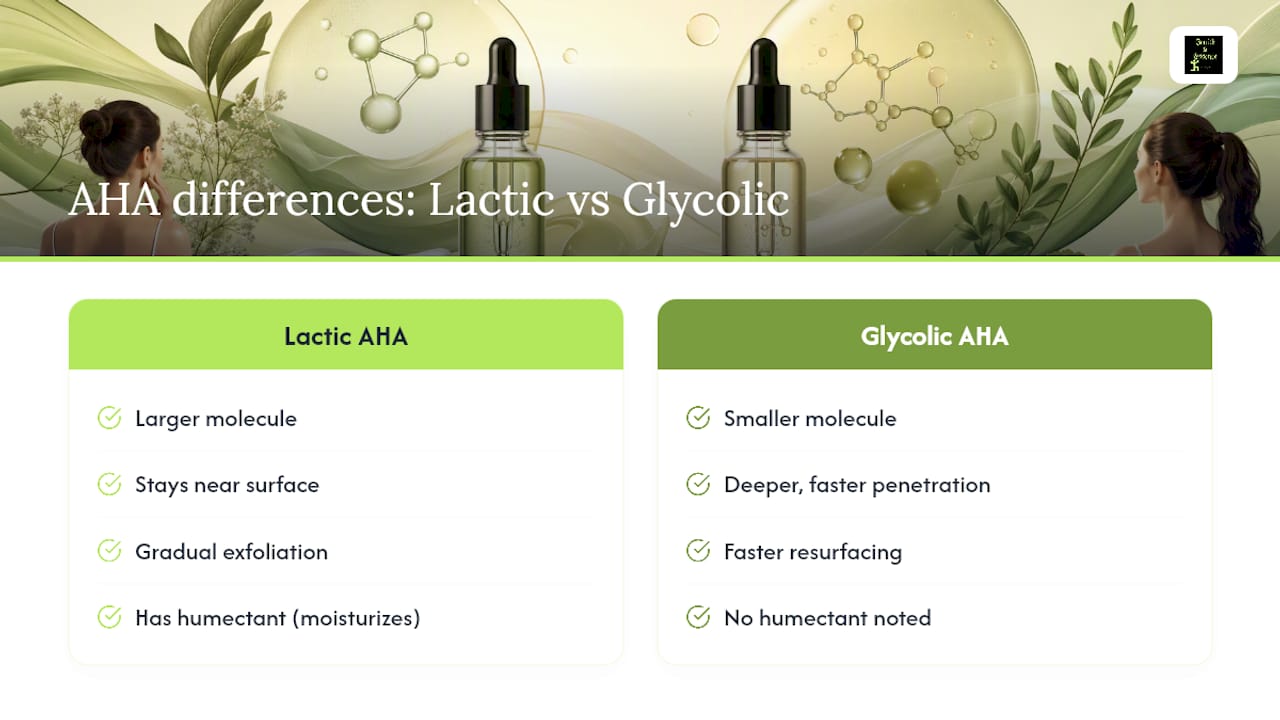
The core difference comes down to size. Glycolic acid has the smallest molecule of the common AHAs, which lets it slip past the skin’s outer layer faster and deeper than larger AHAs like lactic acid. That single fact explains almost everything else about how these two acids behave.
Glycolic acid: smallest molecule, deepest penetration, strongest resurfacing effect, higher irritation potential, typically low single-digit to low double-digit percentages in OTC serums and much higher concentrations in professional peels.
Lactic acid: larger molecule, slower and gentler penetration, doubles as a humectant that pulls in moisture, typically 5% to 12% in OTC creams and serums.
Start here if you’re sensitive, dry, or new to acids: lactic acid, once or twice a week.
Start here if you tolerate actives well and want faster results on texture or pigment: glycolic acid, two to three times a week.
Neither acid is objectively “better.” They’re built for different jobs, and knowing which job you’re hiring for makes the decision much easier.
What Is Lactic Acid and Why Do People Use It?
Lactic acid belongs to the AHA family, originally derived from fermented milk and now produced synthetically for cosmetic use, and it offers notable benefits for skin hydration and wellness. What sets it apart from other AHAs is a built-in humectant effect: it draws water into the skin while it exfoliates, so it’s exfoliating and hydrating at the same time. That dual action is why dermatologists tend to steer dry or reactive skin toward lactic acid before anything stronger.
You’ll find it most often in cleansers at low concentrations (around 5%), leave-on serums and lotions between 5% and 10%, and overnight masks that push closer to 10% to 12% for more noticeable resurfacing. Some professional treatments use lactic acid peels in the 30% to 50% range, but those are applied under clinical supervision with controlled timing.
Clinical trials referenced by WebMD show that lactic acid creams at appropriate concentrations produce measurable improvement in photodamage and skin texture over consistent use. That’s worth repeating because lactic acid gets dismissed as the “weak” acid when it’s really just a differently calibrated one. Broader reviews of alpha hydroxy acids confirm that both glycolic and lactic acid show real clinical benefit for photoaging and rough texture, with the right concentration and consistent use mattering more than which acid you pick.
If your skin flushes easily, feels tight after cleansing, or reacts to new products with redness, lactic acid is the more forgiving entry point into exfoliating acids.
What Is Glycolic Acid and Why Do People Use It?
Glycolic acid is the smallest AHA molecule in common cosmetic use, derived from sugar cane, and it’s the one most associated with visible resurfacing. Because of that small size, it penetrates the skin’s surface faster and more completely than lactic acid does, which is exactly why dermatology sources describe it as the more potent option at similar concentrations.
That extra potency shows up in what it can accomplish. The Cleveland Clinic notes that glycolic acid can stimulate collagen production, unclog pores, and improve rough texture and signs of photoaging, benefits that go beyond simple surface exfoliation. It’s a common first-choice ingredient for people dealing with fine lines, dullness, or lingering dark spots from sun damage or old breakouts.
OTC products typically run from low to mid single-digit percentages, while professional peels use much stronger formulations applied by trained providers, applied and neutralized by a trained provider. It’s worth noting that a peel percentage and an at-home serum percentage aren’t directly comparable. Professional protocols use different pH levels, timing, and neutralization steps, so equating “20% peel” with “20% serum” misreads how the formulation actually behaves on skin.
Some clinical comparisons of AHA peels have found glycolic acid performs well for melasma and hyperpigmentation at professional strengths, reinforcing its reputation as the go-to acid when pigment correction is the main goal.
Potency, Irritation, and What Actually Drives Results
Molecular size is the mechanism, but it’s not the whole story. Glycolic acid’s small size means it reaches deeper skin layers faster, which speeds up cell turnover and resurfacing, but also raises the odds of redness, stinging, or flaking if you move too fast. Lactic acid’s larger molecule stays closer to the surface, so it exfoliates more gradually while its humectant property keeps the skin from feeling stripped.
Here’s the part most product labels don’t tell you: concentration alone doesn’t determine how gentle or strong a product feels. The vehicle, pH, buffering agents, and supporting ingredients like glycerin all shape how an acid performs on your skin, according to research on AHA formulation and clinical outcomes. A well-buffered 10% glycolic serum can feel gentler than a poorly formulated 5% version. That’s why two products with identical percentages can behave completely differently.
As for timeline, most people notice smoother texture within a few weeks of consistent use. Fading of dark spots and finer lines typically takes longer with steady application, since that depends on new skin cells cycling to the surface.
How to Choose Between Glycolic and Lactic Acid
Match the acid to your skin’s current tolerance and your actual goal, not just a generic skin type label. A few checkpoints make this simpler:
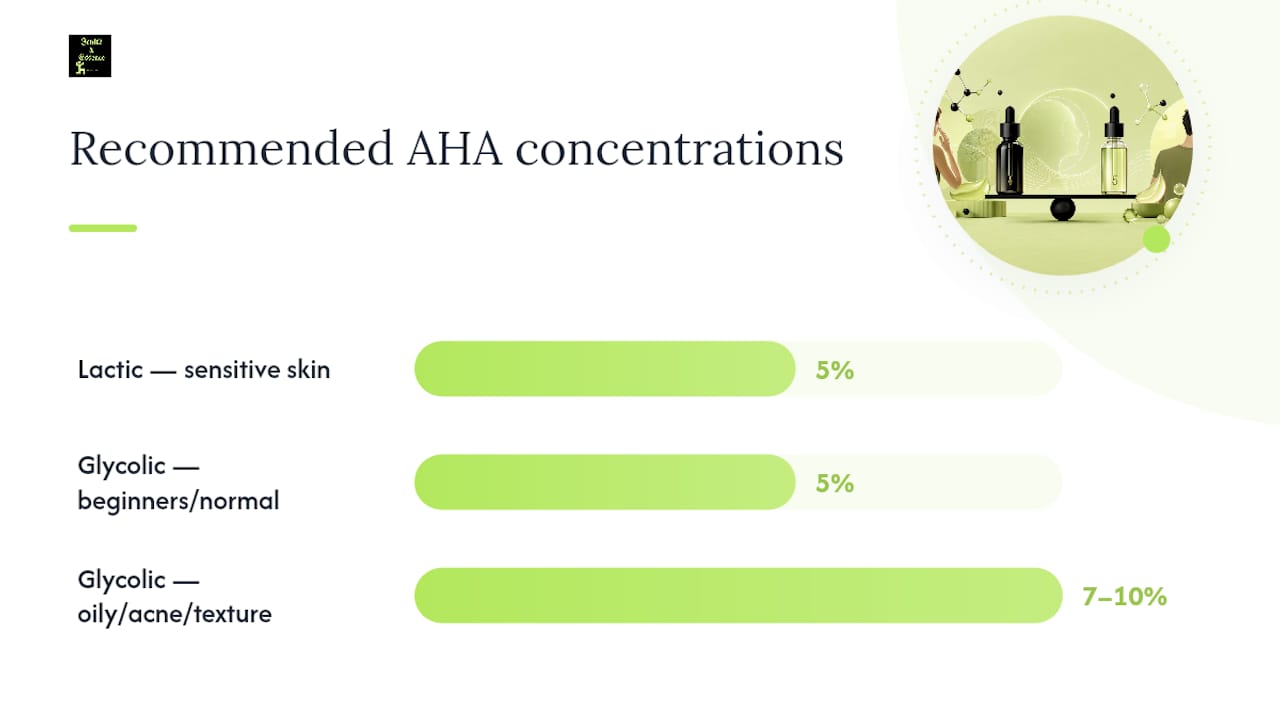
Sensitive, dry, rosacea-prone, or reactive skin: start with lactic acid at 5% once or twice weekly, paired with a barrier-supporting moisturizer.
Normal to oily skin with no acid experience: start with lactic acid or a low-strength glycolic (5%) two nights a week, then build up.
Oily, acne-prone, or dealing with visible sun damage and texture: glycolic acid at 7% to 10%, two to three nights a week once tolerated.
Dark spots, melasma, or post-breakout marks, especially on deeper skin tones: start gentler than you’d think. Minimizing inflammation is the priority, since irritation itself can trigger post-inflammatory hyperpigmentation in skin of color, making lactic acid or a low-strength glycolic the safer opening move even when the end goal is pigment correction.
Currently using prescription retinoids, isotretinoin, or dealing with active dermatitis or eczema: hold off on both acids and check with a dermatologist before adding either one.
If you already use one AHA comfortably and want to level up, professional peels or dermatologist-guided treatments make sense before jumping to a much higher home concentration.
Pro Tip: Step up strength in one variable at a time. If you’re increasing concentration, keep frequency the same for two weeks before adding more nights. Changing both at once makes it hard to tell what caused any irritation.
How to Use AHAs Safely Without Overdoing It
A patch test isn’t optional, it’s the difference between a mild adjustment period and a week of visible irritation. Apply a small amount to your inner forearm or jawline, wait 24 to 48 hours, and only proceed to full-face use if there’s no burning, swelling, or persistent redness.
From there, build gradually:
Start once or twice a week regardless of which acid you choose, then add a night every one to two weeks if skin tolerates it.
Never combine strong AHAs or BHAs with retinoids in the same routine, since dermatology guidance warns this pairing frequently triggers over-exfoliation.
If you use vitamin C at a low pH, apply it in a separate routine (morning acid, nighttime retinoid or vice versa) rather than layering both in one application.
Apply broad-spectrum sunscreen every morning without exception. AHAs increase photosensitivity, and skipping sun protection undoes most of the benefit while raising the risk of new dark spots.
Follow with a ceramide-rich moisturizer to support the skin barrier while it adjusts.
If you notice ongoing redness, tightness, or peeling that doesn’t settle within a few days, stop using the acid, switch to a bland moisturizer for a week, and reintroduce it at a lower frequency. Persistent irritation is worth a conversation with a dermatologist rather than pushing through it. For anyone juggling acids with other actives like vitamin C, a layering guide for actives can help you sequence a routine without canceling out ingredients or overloading your skin.
Can You Combine or Alternate Glycolic and Lactic Acid?
You can, but not carelessly. Both acids work through the same basic mechanism, breaking the bonds that hold dead skin cells together, so using them aggressively in the same routine raises your risk of over-exfoliation fast. The more reliable approach is alternating nights: glycolic one night, lactic the next, with at least one bare night in between while your skin adjusts.
Combination products that blend both acids at lower concentrations can work well, since the formulation is designed to balance potency from the start. Dermatology guidance generally favors alternation over daily double-dosing, especially for anyone newer to acids. If your skin already handles one AHA at a higher strength without issue, a blended low-dose product is a reasonable next step, not a starting point.
How Essencezenith Curates Acids Worth Trusting
Essencezenith lists exact concentrations and full ingredient panels on every AHA product page, not just marketing language like “gentle exfoliation.” That transparency matters most with acids, where a mislabeled percentage or a poorly disclosed vehicle can turn a helpful product into an irritating one. Our curation standard filters out formulas that hide behind vague claims, so you’re comparing real numbers, not guesswork, when you decide between glycolic and lactic. Product pages also flag which formulas suit sensitive or first-time users, so you’re not left interpreting a percentage in isolation.
— Norman
A Gentler Starting Point for Your First AHA
If you’re leaning toward lactic acid after reading this, or you just want a low-risk way to introduce exfoliation without your skin protesting, a moisturizing formula built around hydration support is the more forgiving place to start than a high-strength serum.

Essencezenith’s Herbal Magic Moisturizing Cream is built to support the skin barrier while you introduce an acid routine, pairing well with lactic acid nights when your skin needs recovery rather than more active ingredients. It fits naturally into the alternation approach covered above: acid one night, barrier support the next. Every product page lists full ingredients so you know exactly what you’re applying, and the 30-day satisfaction guarantee means you can return it unused if it’s not the right match for your skin. If you’re also dealing with dryness alongside sensitivity, our dry skin routine guide walks through building a full routine around barrier repair. Browse the moisturizer’s product page now to check ingredient details and place an order.
Sources
FAQ
Is 10% lactic acid stronger than 7% glycolic acid?
Not necessarily. Glycolic acid’s smaller molecule penetrates deeper and acts faster at similar concentrations, so a 7% glycolic product can feel more active than a 10% lactic one, though formulation and pH still play a major role in real-world results.
Can lactic acid get rid of blackheads?
Lactic acid can help by loosening dead skin cells that clog pores, but glycolic acid’s deeper penetration generally makes it more effective for stubborn blackheads and congestion.
What should you never mix with glycolic acid?
Avoid combining glycolic acid with retinoids, strong vitamin C at low pH, or other exfoliating acids in the same routine, since dermatology guidance links this layering to over-irritation.
Can I use glycolic acid and lactic acid together?
Yes, but alternate nights rather than applying both at once, or choose a formulated combination product with lower concentrations of each to reduce the risk of over-exfoliation.
Recommended
Comments