
Adaptogens for Stress: What the Evidence Actually Shows
- Norman Church
- Aug 13
- 13 min read

Adaptogens can meaningfully help with chronic, cortisol-driven stress and fatigue-pattern burnout, though they work best as one part of a broader plan, not a standalone fix. The three herbs with the strongest human trial evidence are ashwagandha (Withania somnifera), rhodiola (Rhodiola rosea), and holy basil (Ocimum sanctum). A second tier, including Panax ginseng, eleuthero (Eleutherococcus senticosus), reishi (Ganoderma lucidum), and schisandra, has more limited or narrower human-trial support.
Before you start any adaptogen:
The FDA does not pre-approve dietary supplements for safety or efficacy. Manufacturers bear responsibility for labeling.
The NIH’s National Center for Complementary and Integrative Health (NCCIH) notes that while some trial evidence exists, research quality varies and gaps remain.
The VA Whole Health Library lists specific adaptogens with practical notes for clinical care.
If you take prescription medications, consult a clinician before starting. Essencezenith strongly recommends this step, especially for anyone on thyroid drugs, immunosuppressants, sedatives, or antidepressants.
Key Takeaways
Adaptogens for stress have the strongest evidence when used as standardized extracts at trial-matched doses, with ashwagandha and rhodiola leading on replicated human RCT data.
Point | Details |
Ashwagandha leads on cortisol evidence | A 2023 meta-analysis found a mean cortisol reduction of ~3.27 µg/dL versus placebo after 56–60 days. |
Rhodiola works faster, for fatigue | Anti-fatigue effects can appear within days using SHR-5 extract; best matched to burnout-pattern stress. |
Standardized extracts only | KSM-66, Sensoril, and SHR-5 are the extract designations used in published trials; generic root powder is not equivalent. |
Allow 8 weeks before judging | Cortisol and perceived-stress changes in ashwagandha trials emerge at 4–8 weeks; stop if no benefit by week 8. |
Essencezenith applies the same standard | Essencezenith curates wellness products with transparent ingredients and a 30-day satisfaction guarantee. |
Table of Contents
What are adaptogens?
Adaptogens are plant- and fungal-derived compounds described as “stress-response modifiers.” The working definition: they increase the body’s nonspecific resistance to stressors, physical, chemical, or biological, without causing major disruption to normal function. Think of them less as sedatives and more as regulators that help the body return to equilibrium faster after a stressor hits.
The concept has roots in Ayurveda and Traditional Chinese Medicine, where herbs like ashwagandha and ginseng were used for centuries to build resilience and vitality. The modern term “adaptogen” was coined in the mid-20th century by Soviet pharmacologist Nikolai Lazarev, who was looking for compounds that could help soldiers and cosmonauts perform under extreme conditions. That framing, nonspecific resistance across multiple physiological systems, still shapes how researchers study these herbs today.
One important limit to set upfront: “adaptogen” is a descriptive category, not a strict pharmacological classification. It groups herbs that share a general profile of effects, not a single mechanism or chemical class. Evidence quality varies considerably from herb to herb, and from one extract to another within the same herb.
How adaptogens are thought to work and what the research shows
The proposed mechanisms are real and biologically plausible, even if the clinical evidence is still catching up. A mechanistic review by Panossian and Wikman describes how adaptogens modulate the central nervous system and cellular stress systems to increase nonspecific stress resistance. Three main pathways explain most of the observed effects:
HPA-axis modulation. The hypothalamic-pituitary-adrenal axis governs the cortisol stress response. Several adaptogens, ashwagandha most clearly, appear to blunt excessive HPA activation, which translates to lower circulating cortisol in trial conditions.
Monoamine and neurochemical effects. Rhodiola’s active compounds, rosavins and salidroside, interact with monoamine oxidase and serotonin/dopamine pathways. This is the likely mechanism behind its anti-fatigue and mood-stabilizing effects, which tend to appear faster than cortisol changes.
Cellular stress proteins and antioxidant activity. Some adaptogens upregulate heat-shock proteins and reduce oxidative stress markers at the cellular level, supporting what researchers call “stress resilience” from the bottom up. Recent NCBI/PMC work ties these phytochemical mechanisms to observed physiologic outcomes in both animal and human studies.
The clinical evidence landscape is uneven. Ashwagandha has the clearest replicated signal: multiple randomized controlled trials using standardized extracts (KSM-66, Sensoril) show consistent reductions in cortisol and Perceived Stress Scale scores over 4–8 weeks. Rhodiola trials show anti-fatigue benefits, with some effects appearing within days. Other herbs, ginseng, eleuthero, reishi, have smaller or more mixed human-trial records.
The methodological caveats matter. Most trials are small (under 100 participants), run for only 4–8 weeks, use heterogeneous extract preparations, and measure outcomes inconsistently. Meta-analytic results are mixed: cortisol markers often shift in the expected direction, but subjective stress scores are less consistent across studies. That does not mean the herbs don’t work. It means the evidence base is promising but not yet definitive.
Profiles of common adaptogens for stress
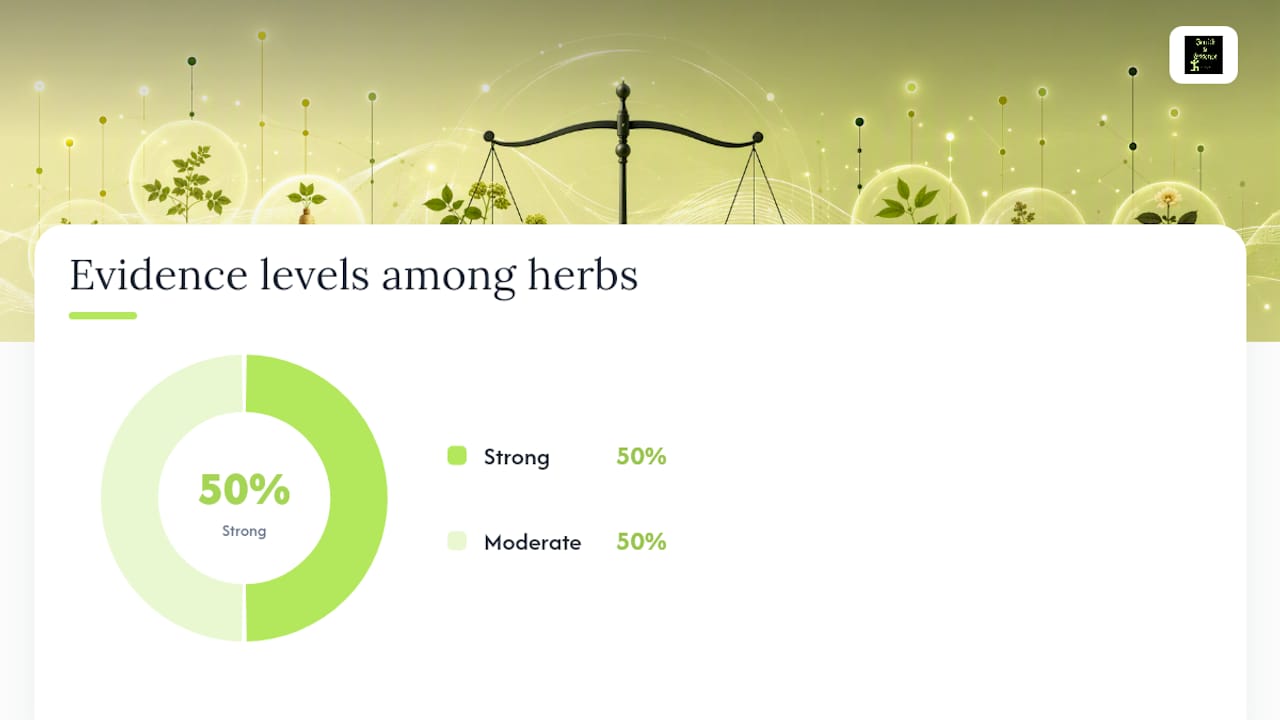
Each herb below carries an evidence-level tag based on the quality and volume of human RCT data: Strong (multiple replicated RCTs with standardized extracts), Moderate (some positive RCTs, smaller samples or fewer replications), or Limited (mostly preclinical or traditional-use data).
Herb | Best for | Evidence level | Common studied dose / extract notes | Forms | Time to effect | Main cautions / interactions |
Ashwagandha (W. somnifera) | Chronic stress, anxious insomnia, cortisol reduction | Strong | 300–600 mg/day; KSM-66 or Sensoril standardized extracts used in trials | Capsule, powder, tincture | 4–8 weeks | Thyroid meds, sedatives, immunosuppressants; rare liver reports; avoid in pregnancy |
Rhodiola (R. rosea) | Fatigue-pattern burnout, mental performance, acute stress | Strong | 200–400 mg/day; SHR-5 extract (3% rosavins, 1% salidroside) | Capsule, tincture | Days to 2 weeks for fatigue | Stimulating at high doses; avoid late-day dosing; possible interaction with antidepressants |
Holy basil / Tulsi (O. sanctum) | Anxious stress, blood sugar, mild mood support | Moderate | 300–600 mg/day dried leaf or extract | Capsule, tea | 2–4 weeks | May lower blood sugar; caution with anticoagulants |
Panax ginseng | Cognitive fatigue, immune support, energy | Moderate | 200–400 mg/day standardized to ginsenosides | Capsule, extract | 4–8 weeks | Insomnia at high doses; interacts with warfarin, stimulants, antidepressants |
Eleuthero (E. senticosus) | Fatigue, physical endurance, general resilience | Moderate | 300–1,200 mg/day root or extract | Capsule, tincture, tea | 4–6 weeks | May affect blood pressure; interacts with digoxin |
Reishi (G. lucidum) | Immune modulation, sleep quality, mild stress | Limited | 1.5–9 g/day dried mushroom; 1–1.5 g extract | Capsule, powder, tea | 4–8 weeks | Anticoagulant interaction; GI upset at high doses; avoid before surgery |
Schisandra | Liver support, mental endurance, adaptogenic resilience | Limited | 500–2,000 mg/day dried berry or extract | Capsule, tincture | 4–8 weeks | Limited human data; possible interaction with CYP450-metabolized drugs |
Pro Tip: Standardization matters more than brand name. KSM-66 and Sensoril (ashwagandha) and SHR-5 (rhodiola) are the extract designations that appear in published trials. A product listing “ashwagandha root powder” without a standardization percentage is not the same thing as what researchers tested.
How to take adaptogens: forms, starter dosing, and timing
Getting the form right matters as much as choosing the herb. Here is what to know before you buy:
Standardized extract capsules are the most consistent option and the closest match to what clinical trials used. Look for the extract designation (KSM-66, SHR-5) on the label.
Tinctures offer flexible dosing and faster absorption for some compounds, but concentration varies by brand. Check the mg-per-mL equivalent against trial doses.
Teas deliver a lower, highly variable dose. Fine for general wellness use, but unlikely to replicate trial-level effects for stress reduction.
Powdered root (bulk or in smoothies) is the least standardized form. Active-compound concentration can vary significantly between batches.
For starter dosing, match the lower end of the trial-backed range and hold there for 2–4 weeks before considering an increase:
Ashwagandha: start at 300 mg/day of a standardized extract, taken with food. Trials used 300–600 mg/day.
Rhodiola: 200 mg twice daily of SHR-5 extract is a common trial dose. Start with one dose in the morning.
Holy basil: 300 mg/day of a standardized leaf extract is a reasonable starting point.
Timing is not arbitrary. Rhodiola is mildly stimulating and works best taken in the morning, ideally before a demanding period. Taking it in the evening can disrupt sleep. Ashwagandha, by contrast, has a calming, cortisol-lowering profile that suits an evening dose, particularly when anxious insomnia is the main complaint.
Plan for an 8-week minimum trial. Check in with yourself at week 4: are sleep quality, daytime fatigue, or perceived stress shifting? If nothing has moved by week 8 on a trial-matched dose of a standardized extract, that is a meaningful signal to reassess, not a reason to add more herbs.
Safety, side effects, and drug interactions
Most adaptogens are well tolerated at typical doses in healthy adults, but “natural” does not mean risk-free. The interactions and contraindications below are the ones that matter most clinically.
Harvard Health is direct on this: individuals on thyroid medication, immunosuppressants, or sedatives should consult a physician before using ashwagandha. Rare reports of liver-related side effects mean long-term use warrants medical oversight. The same caution applies broadly across the category.
Primary drug interactions to check before starting:
Thyroid medications (levothyroxine): ashwagandha may affect thyroid hormone levels.
Immunosuppressants (cyclosporine, tacrolimus): adaptogens with immune-modulating activity, including reishi and eleuthero, may counteract these drugs.
Sedatives and anxiolytics (benzodiazepines, zolpidem): additive sedation risk with calming adaptogens.
Antidepressants and MAOIs: rhodiola’s monoamine effects create a theoretical interaction risk.
Anticoagulants (warfarin): Panax ginseng and reishi may affect clotting; monitor INR if combining.
Blood pressure medications: eleuthero may affect blood pressure readings.
Stop the product and contact your clinician immediately if you notice: jaundice (yellowing of skin or eyes), dark urine, unexplained abdominal pain, new palpitations, or a sudden worsening of fatigue. These are red flags for liver stress or a serious adverse reaction.
Who should avoid adaptogens without direct clinician guidance:
Pregnant or breastfeeding individuals (safety data is insufficient for most adaptogens)
Anyone with autoimmune conditions (immune-modulating herbs can be unpredictable)
People with liver or kidney dysfunction
Anyone scheduled for surgery (stop at least two weeks before, or as your surgeon advises)
Anyone on five or more medications (polypharmacy raises interaction risk substantially)
Pro Tip: Bring your supplement label, not just the herb name, to your clinician. The extract type, dose, and any added ingredients all affect the interaction picture.
How long to take adaptogens and what to expect
Rhodiola is the fastest-acting adaptogen with meaningful human trial support. Some people notice reduced fatigue and sharper focus within a few days of starting an SHR-5 extract. That speed reflects its monoamine-pathway mechanism, which operates more like a neurochemical effect than a hormonal one.
Ashwagandha works on a longer clock. The cortisol and perceived-stress changes seen in trials typically emerge at the 4-week mark and consolidate by weeks 6–8. Expecting results in the first week is setting yourself up for disappointment and early discontinuation.
Measuring your progress matters. You do not need a cortisol lab test to track benefit. Use a simple weekly self-rating on three dimensions: perceived stress (a 1–10 scale works fine), sleep quality, and daytime fatigue. Keep a brief log. If you want cortisol data, ask your clinician for a morning serum sample taken at the same time each draw, since cortisol fluctuates significantly across the day and between labs.
The question of cycling versus continuous use does not have a definitive answer in the literature. Some practitioners recommend cycling (8 weeks on, 2–4 weeks off) to prevent tolerance, particularly with rhodiola. Others use ashwagandha continuously for months without reported issues. If you reach 8 weeks on a trial-matched dose with no meaningful change in any of the three tracked dimensions, stop the product rather than escalating the dose. Switching herbs or consulting a clinician about the underlying stress pattern is a better next step.
Regulation, product quality, and how to choose a supplement
The FDA does not evaluate dietary supplements for efficacy before they reach shelves. Manufacturers are legally responsible for safety and accurate labeling under the Dietary Supplement Health and Education Act (DSHEA), but pre-market approval is not required. That means a product can be sold with a health claim before any independent verification of its contents.
Third-party testing fills that gap. Look for these seals on any adaptogen product you consider:
USP Verified: tests for ingredient identity, potency, and contaminants.
NSF Certified for Sport: particularly relevant if you are subject to drug testing; also confirms label accuracy.
ConsumerLab Approved: independent testing organization that publishes pass/fail results.
Beyond the seal, check for:
Extract standardization listed on the label (e.g., “standardized to 5% withanolides,” “KSM-66,” “SHR-5 extract”).
A clear ingredient list with no proprietary blends that hide individual doses.
A certificate of analysis (COA) available from the manufacturer, confirming what the lab found in that batch.
Transparent manufacturing information (GMP-certified facility).
A product with a third-party seal, a named standardized extract, and a COA available on request is meaningfully different from a generic root powder. That difference is what smart online shopping practices and a consumer protection checklist can help you navigate.
Using adaptogens as part of a broader stress-management plan
Adaptogens are supportive tools. Experts consistently note that their effectiveness depends on foundational lifestyle factors being addressed first. An adaptogen layered on top of chronic sleep deprivation and a high-caffeine diet is unlikely to move the needle much.
A practical integration sequence:
Stabilize sleep first. Aim for 7–9 hours. If anxious insomnia is the primary complaint, ashwagandha combined with CBT-I (Cognitive Behavioral Therapy for Insomnia) techniques, stimulus control, sleep restriction, relaxation training, is a well-supported pairing.
Moderate caffeine. High caffeine intake blunts the calming effects of adaptogens and raises cortisol independently.
Add movement. Rhodiola pairs naturally with morning exercise for burnout-pattern stress. The herb’s anti-fatigue effect can make it easier to sustain a workout routine during high-demand periods.
Then add the adaptogen as an adjunct, not a replacement for the above.
For workplace burnout specifically, rhodiola plus scheduled recovery blocks (deliberate periods of low cognitive demand during the workday) addresses both the neurochemical and behavioral sides of the problem. For anxious, wired stress with sleep disruption, ashwagandha plus evening wind-down routines and reduced screen exposure is a more fitting combination.
One line that should not need saying but does: if you are experiencing a diagnosable anxiety disorder, depression, or PTSD, adaptogens are not a substitute for evidence-based mental health treatment. Connecting to a behavioral health provider is the right first step, and adaptogens can be discussed as an adjunct from there. The interconnectedness of beauty and health extends to mental wellness, and a holistic approach means knowing when to refer out.
What to tell your clinician before starting an adaptogen
A five-minute conversation with your clinician goes a long way. Come prepared with the following:
Your current medication list, including OTC drugs, vitamins, and any other herbal supplements.
Relevant recent labs, particularly thyroid panel (TSH, free T4) and liver function tests (ALT, AST) if you have had them done.
The supplement label for the specific product you are considering, including brand name, extract type, standardization percentage, and dose per serving.
A symptom timeline: when stress symptoms started, what you have already tried, and what you are hoping the adaptogen will address.
Suggested questions to ask:
“Are there interactions between this herb and any of my current medications?”
“Is this safe given my thyroid status / autoimmune condition / liver history?”
“What monitoring do you recommend, and at what point should I stop?”
If you develop jaundice, unexplained fatigue that worsens rather than improves, dark urine, or new palpitations after starting an adaptogen, stop the product immediately and call your clinician that day. Do not wait for a scheduled appointment.
Research and expert takeaways on adaptogen efficacy
The clearest signal in the clinical literature belongs to ashwagandha. A 2023 systematic review and meta-analysis found that Withania somnifera significantly decreased serum cortisol and Perceived Stress Scale scores versus placebo after approximately 56–60 days in mentally stressed healthy adults. The cortisol reduction (mean difference of approximately 3.27 µg/dL) is modest in absolute terms but consistent in direction across the included trials.
Key finding: Ashwagandha reduced serum cortisol by a mean of approximately 3.27 µg/dL versus placebo after 56–60 days in healthy adults with mental stress, based on a 2023 systematic review and meta-analysis.
Rhodiola’s evidence base is strongest for fatigue and burnout-pattern stress. Multiple RCTs using the SHR-5 extract show improved attention and reduced fatigue, with some effects appearing within days to weeks. The mechanism, monoamine modulation, is distinct from ashwagandha’s HPA-axis pathway, which is why the two herbs are sometimes used together for different aspects of a stress profile.
The honest summary of the field: trials are often small, heterogeneous in extract type and dose, and short (4–8 weeks). Mechanism studies support biological plausibility, but they do not replace larger confirmatory trials. Standardized extracts at trial-matched doses, combined with an 8-week evaluation window and basic safety monitoring (liver symptoms, interaction checklist), represent the most clinically aligned approach to using these herbs. Reading how clinical studies are interpreted can help you weigh the evidence yourself rather than relying on marketing claims.
A wellness editor’s perspective on adaptogens for stress
The thing most adaptogen coverage gets wrong is the framing: these herbs are presented as either miracle cures or useless placebos, and neither is accurate. The evidence sits in a more interesting middle ground. Ashwagandha has a genuinely replicated cortisol signal in standardized-extract trials. Rhodiola has a real anti-fatigue effect that shows up fast enough to be practically useful. That is worth something, especially for people who have already addressed sleep and lifestyle basics and are still running on empty.
What I would personally check before starting: my medication list against the interaction table above, whether the product carries a USP or NSF seal, and whether the extract is named (KSM-66, SHR-5) rather than generic. I would pick one herb matched to my specific stress pattern, not a stack of five, and I would give it a full 8 weeks before deciding it did or did not work.
The evidence gaps are real. Most trials are small, most run for under two months, and the field has a replication problem. That does not mean the herbs are inert. It means the confidence interval around “how much will this help me specifically” is wide. Individualized decision-making, with a clinician in the loop for anyone with health conditions or medications, is not overcaution. It is just accurate.
Essencezenith and wellness products worth your attention
Stress affects more than your mood. Chronic cortisol elevation shows up in skin texture, sleep quality, and energy, which is exactly why Essencezenith curates wellness and beauty products with the same evidence-first standard this article applies to adaptogens: transparent ingredients, third-party verified where possible, and no vague claims. The 30-day satisfaction guarantee means you are not locked into a product that does not work for you.
If you are building a stress-management routine that includes both lifestyle changes and targeted supplements, Essencezenith’s catalog gives you a starting point that prioritizes quality over marketing noise. Browse the current wellness selection at Essencezenith and use the product filters to find options with clear ingredient sourcing and dosing information.
Sources
These are the primary sources used in this article, listed for readers who want to verify claims or go deeper:
FAQ
What adaptogens work best for stress and anxiety?
Ashwagandha has the strongest replicated human RCT evidence for reducing cortisol and perceived stress scores, making it the top choice for chronic, anxiety-driven stress. Rhodiola is the better fit for fatigue-pattern burnout, with anti-fatigue effects appearing faster, sometimes within days.
How long before adaptogens start working?
Rhodiola can show anti-fatigue effects within days to two weeks. Ashwagandha typically needs 4–8 weeks at a standardized-extract dose before cortisol and perceived-stress changes become measurable.
Are adaptogens safe to take every day?
Most adaptogens are well tolerated at typical doses in healthy adults, but daily use warrants attention to drug interactions and rare adverse effects. Anyone on thyroid medications, immunosuppressants, sedatives, or anticoagulants should consult a clinician before starting.
What is the difference between ashwagandha and rhodiola for stress?
Ashwagandha works primarily through HPA-axis modulation, lowering cortisol over weeks, and suits anxious, wired stress with sleep disruption. Rhodiola acts on monoamine pathways for faster anti-fatigue effects and suits burnout-pattern stress with depleted energy and poor focus.
How do I know if an adaptogen supplement is high quality?
Look for a named standardized extract (KSM-66 or Sensoril for ashwagandha; SHR-5 for rhodiola), a third-party testing seal (USP, NSF, or ConsumerLab), and a certificate of analysis available from the manufacturer. Generic root powder without standardization information is not equivalent to what clinical trials tested.
This article provides general information only and is not a substitute for professional medical advice. Consult a qualified clinician before starting any supplement, particularly if you have a health condition or take prescription medications.
Recommended
Comments