
Sustainable Beauty Explained: What It Really Means
- Norman Church
- Jun 8
- 9 min read

TL;DR:
Sustainable beauty embraces a full lifecycle approach, considering sourcing, packaging, labor, and disposal equally. It differs from clean and natural beauty by prioritizing environmental and social responsibility across all production stages. Starting with high-use, long-lasting products and seeking verified certifications ensures genuine action toward sustainability.
Sustainable beauty is the practice of creating and using beauty products that minimize harm to people and the planet across the entire product lifecycle, from ingredient sourcing to disposal. The term covers far more than what ends up in a formula. It includes packaging choices, carbon emissions from manufacturing and shipping, labor conditions in supply chains, and how a product breaks down after you throw it away. What is sustainable beauty explained in one sentence? It is a holistic, lifecycle-based philosophy that treats environmental and social responsibility as non-negotiable, not optional extras. This article breaks down the definition, separates it from related terms like clean and natural beauty, examines the real challenges the industry faces, and gives you practical steps to build a routine that actually reflects your values.
What is sustainable beauty, and how is it defined?
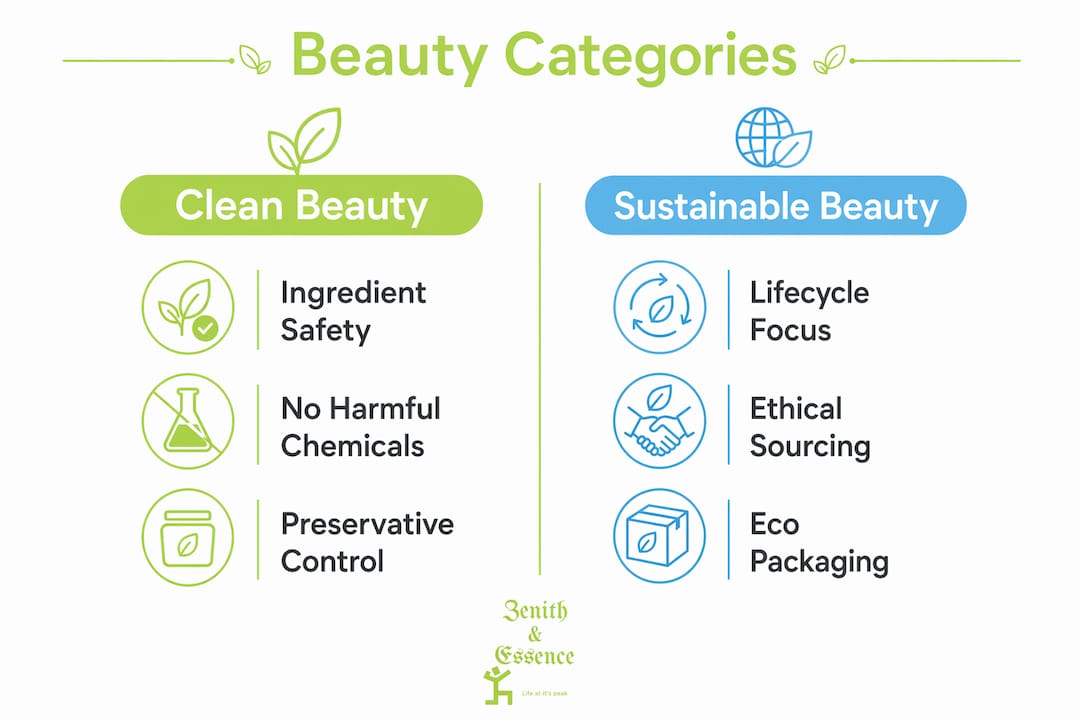
Sustainable beauty is defined as a product philosophy that accounts for environmental and social impact at every stage of a product’s life. That means the farm where an ingredient is grown, the factory where it is processed, the packaging it ships in, the emissions from getting it to your door, and what happens when the bottle is empty. This definition separates sustainable beauty from narrower concepts like clean beauty or natural beauty, which focus on only one or two of those stages.
The distinction matters because a product can be clean and still be unsustainable. A serum made with safe, non-toxic ingredients but packaged in a multilayer plastic tube with a metal pump is a recycling nightmare. Conversely, a product with a recyclable glass bottle but ingredients sourced through exploitative labor practices fails the social side of the equation. Sustainable beauty requires the whole picture.
Three named frameworks help anchor this concept. Ecocert and COSMOS certifications assess organic content and environmental production standards. The Fair for Life certification addresses labor and trade equity. Together, they cover different dimensions of what the definition of sustainable beauty actually demands in practice.
How sustainable beauty differs from clean and natural beauty
These three terms appear on labels constantly, and they are not interchangeable. Understanding the gaps between them protects you from marketing claims that sound responsible but deliver only part of the story.
Clean beauty focuses on ingredient safety. It typically means a brand has excluded certain synthetic chemicals, preservatives, or fragrances considered potentially harmful. Clean beauty says nothing about packaging, carbon footprint, or how workers are treated. A product can be 100% clean and still arrive in single-use plastic with a supply chain that depletes rainforest land.
Natural beauty emphasizes plant-derived or minimally processed ingredients. The assumption is that natural equals better, but that logic breaks down quickly. Palm oil is natural. So is mica. Both are linked to deforestation and unsafe mining conditions in parts of Southeast Asia and India. Natural sourcing at scale can be more resource-intensive than a well-managed synthetic alternative.
Sustainable beauty absorbs both concerns and adds several more. The table below shows where each concept focuses its attention.
Dimension | Clean beauty | Natural beauty | Sustainable beauty |
Ingredient safety | Yes | Partial | Yes |
Plant-based sourcing | No | Yes | Partial |
Packaging impact | No | No | Yes |
Carbon footprint | No | No | Yes |
Labor and fair trade | No | No | Yes |
End-of-life disposal | No | No | Yes |
The overlap between these categories is real, and many brands operate across all three. But only sustainable beauty treats the full lifecycle as the standard. When a brand uses the word “sustainable” on its packaging, that table is the checklist you should hold it to.
What are the biggest sustainability challenges in the beauty industry?
The beauty industry generates enormous waste, and the problems are structural, not just cosmetic. Understanding them helps you make smarter choices as a consumer.
Packaging is the most visible problem. Beauty packaging’s recycling issues come from pumps, multilayer plastics, mixed materials, and decorative components that most local recycling facilities cannot process. A bottle may technically be recyclable, but if your local facility rejects it due to contamination or material complexity, it goes to landfill anyway. Plastic pollution from billions of discarded beauty containers is a documented environmental crisis, with plastic taking hundreds to thousands of years to degrade and causing measurable harm to wildlife and marine ecosystems.
Ingredient sourcing carries hidden costs. Water-intensive crops like rose and argan require significant land and irrigation. Ingredients like shea butter and vanilla involve complex global supply chains where fair labor is difficult to verify without third-party audits. Biodiversity loss from monoculture farming for beauty ingredients is a growing concern among environmental scientists.
Carbon emissions from manufacturing and shipping add up fast, especially for brands with global supply chains and no carbon offset programs. A product made in France, packaged in China, and shipped to a customer in Texas has a significant footprint before it even reaches the bathroom shelf.
Microplastics in rinse-off products like scrubs and some shampoos enter waterways directly. Regulatory pressure is increasing in the EU and parts of the US, pushing brands to reformulate. This is one area where consumer demand and legislation are moving in the same direction.
Common myths about sustainable beauty products
The biggest myth is that sustainable beauty costs more and performs worse. Multi-use sustainable products often simplify routines and reduce the total number of items you need, which cuts long-term spending. A concentrated shampoo bar that replaces three plastic bottles is not more expensive over time. It is cheaper, and it creates less waste.
A second myth is that “cruelty-free,” “vegan,” and “sustainable” mean the same thing. They do not. Cruelty-free means no animal testing. Vegan means no animal-derived ingredients. Neither term says anything about packaging, sourcing ethics, or environmental impact. You can find vegan, cruelty-free products that are packaged in non-recyclable plastic and manufactured with no transparency whatsoever.
A third myth is that refillable packaging is always the greener choice. Refillable systems only deliver environmental benefits when the base container is genuinely durable and replaces more wasteful packaging over multiple uses. A flimsy refillable container that breaks after two uses is not better than a single well-made recyclable bottle.
Pro Tip: When a brand uses vague language like “eco-conscious” or “green formula” without a certification or sourcing statement to back it up, treat it as a red flag. Check the brand’s website for signs of authentic products before buying.
Finally, organic and natural labels are not guarantees of sustainability. Organic certification covers farming practices for specific ingredients but says nothing about packaging, labor, or transportation. A product can carry an organic seal and still fail on every other sustainability dimension.
How to achieve sustainable beauty in your daily routine
You do not need to replace everything at once. Sustainability professionals consistently recommend that the most sustainable product is the one already in your cabinet. Finish what you have before replacing it. Overconsumption is the enemy of sustainability, even when the products you are buying are technically eco-friendly.
When you are ready to make swaps, use this sequence:
Start with high-volume products. Switching cleansers, moisturizers, and shampoos first delivers the greatest waste reduction because these are the products you use and replace most often. A sustainable shampoo bar or refillable cleanser removes more plastic from your routine than switching to a sustainable mascara.
Choose concentrated or solid formulations. Solid shampoo bars, concentrated serums, and powder cleansers use less water in production and require smaller, lighter packaging. Less weight means lower shipping emissions.
Evaluate brand transparency before buying. Look for brands that publish their ingredient sourcing policies, hold third-party certifications, and provide audit results. Transparency is not a marketing tactic. It is the baseline for any brand making genuine sustainability claims.
Prioritize longevity and performance. A product you use completely and replace less often is more sustainable than a trendy eco-branded item you abandon halfway through. Performance matters because waste matters.
Avoid DIY unless you know what you are doing. Water-based DIY formulas carry real safety risks without proper preservation knowledge. Single-ingredient swaps like facial oils or plant butters are safer starting points for beginners.
Pro Tip: Building a minimal, effective routine with fewer, better products is one of the most effective sustainable beauty practices available. Less product turnover means less packaging waste and lower spending over time.
What certifications actually mean on sustainable beauty labels
Certifications are the most reliable way to verify sustainability claims, but each one covers a different scope. Knowing what each label actually certifies prevents you from being misled.
Ecocert certifies that a product meets organic and natural ingredient standards, with requirements for biodegradable formulas and eco-friendly packaging.
COSMOS (Cosmetic Organic and Natural Standard) is a European framework that certifies organic content percentages, responsible sourcing, and manufacturing processes. It is one of the most rigorous ingredient-focused certifications available globally.
Leaping Bunny certifies that no animal testing occurred at any stage of production, including ingredient suppliers. It is the gold standard for cruelty-free verification.
Fair for Life certifies fair trade and ethical labor practices throughout the supply chain. It is the certification most directly tied to the social dimension of sustainable beauty.
Multiple credible certifications on a single product provide stronger evidence of legitimacy than any single label alone. A brand holding both COSMOS and Fair for Life certification is making verifiable claims across ingredient quality and labor ethics simultaneously.
Watch for vague language that mimics certification without the accountability. Phrases like “sustainably inspired,” “earth-friendly formula,” or “conscious beauty” carry no third-party verification and no legal definition. Ask brands directly which certifications they hold and what they cover. Brands committed to genuine sustainability transparency will answer that question without hesitation. Those that deflect or respond with marketing language are telling you something important.
Understanding B-Corp certification is also worth your time. B-Corp status covers a brand’s entire business model, including governance, worker treatment, community impact, and environmental performance, not just its products.
Key takeaways
Sustainable beauty is a lifecycle-based standard that covers ingredient sourcing, packaging, labor practices, and disposal, and no single certification or label covers all of it.
Point | Details |
Full lifecycle accountability | Sustainable beauty covers sourcing, manufacturing, packaging, shipping, and disposal, not just ingredients. |
Clean does not equal sustainable | Clean beauty focuses on ingredient safety only; sustainable beauty demands environmental and social responsibility across all dimensions. |
Certifications verify claims | Ecocert, COSMOS, Leaping Bunny, and Fair for Life each certify different aspects; multiple certifications together provide stronger evidence. |
Start with high-use products | Switching cleansers, shampoos, and moisturizers first delivers the greatest reduction in packaging waste. |
Avoid overconsumption | Finishing current products before replacing them is the single most effective sustainable beauty practice. |
Why sustainable beauty is worth taking seriously
I have spent years watching brands use sustainability as a design choice rather than a business commitment. The green packaging, the earthy fonts, the “conscious” tagline. It looks convincing until you ask one question: “Can you show me your sourcing audit?” Most cannot.
What I find genuinely encouraging is that consumer pressure is forcing a real shift. Brands like BYMANYC and others holding COSMOS certification are proving that high performance and genuine sustainability are not competing priorities. The products work. The supply chains are documented. The packaging is designed for end-of-life, not just shelf appeal.
My honest view is that the all-or-nothing mentality is the biggest obstacle most people face. You do not need a fully sustainable routine by next month. You need one better decision the next time a product runs out. That is how real change accumulates. Sustainable beauty is not a destination you arrive at. It is a direction you keep moving in, one informed purchase at a time.
— Norman
Explore sustainable beauty at Essencezenith

Essencezenith curates beauty products built around transparency, performance, and genuine ingredient integrity. If you are ready to make your first sustainable swap, the Eco Nourishing Facial Oil by BYMANYC New York is COSMOS certified organic and formulated without compromise on results. For everyday use, the Natural Vegetable Deodorant delivers effective protection with plant-based ingredients and minimal packaging. Every product at Essencezenith comes with a 30-day satisfaction guarantee, so you can try without risk. Start with one swap, choose a product you use daily, and let the results speak for themselves.
FAQ
What does sustainable beauty mean?
Sustainable beauty means creating and using beauty products that minimize environmental and social harm across the full product lifecycle, including ingredient sourcing, manufacturing, packaging, and disposal. It goes beyond ingredient safety to include carbon footprint, labor practices, and end-of-life impact.
Is sustainable beauty more expensive than conventional beauty?
Not necessarily. Multi-use and concentrated sustainable products often reduce the total number of items in your routine, lowering long-term costs. The perception of higher cost comes from comparing single product prices rather than total routine spending over time.
What is the difference between clean beauty and sustainable beauty?
Clean beauty focuses on excluding potentially harmful ingredients from formulas. Sustainable beauty covers a broader set of concerns including packaging waste, carbon emissions, fair labor, and biodiversity. A product can be clean without being sustainable.
Which certifications should I look for on sustainable beauty products?
Look for Ecocert or COSMOS for organic and natural ingredient standards, Leaping Bunny for cruelty-free verification, and Fair for Life for ethical labor practices. Holding multiple certifications across these categories provides the strongest evidence of genuine sustainability.
Where should I start when building a sustainable beauty routine?
Start by finishing the products you already own, then prioritize swapping high-volume items like cleansers, shampoos, and moisturizers. These products are replaced most often, so switching them first delivers the greatest reduction in packaging waste and environmental impact.
Recommended
Comments