
How to Test Beauty Products Online Before You Buy
- Norman Church
- Jun 7
- 8 min read

TL;DR:
Online beauty testing uses AI virtual try-ons and sample programs to help consumers evaluate products safely and effectively. Combining high-quality photos, trusted platforms, and ingredient knowledge enhances accuracy and safety in online beauty purchases. Utilizing AI tools alongside real reviews and ingredient checks provides a comprehensive approach for smarter, lower-risk beauty shopping.
Testing beauty products online is the practice of using AI-powered virtual try-on tools, sample programs, and review platforms to evaluate makeup and skincare before committing to a purchase. This approach has fundamentally changed how beauty shoppers make decisions. Platforms like YouCam and Cliptics let you preview over 100 shades of lipstick, foundation, and eyeshadow on your own face in seconds, for free. Trusted communities like Influenster go further, sending physical samples in exchange for honest feedback. The result is a smarter, lower-risk way to find beauty products online that actually work for your skin tone, type, and preferences.
How to test beauty products online: what you need first
Before you open any AI simulator or sign up for a sample program, preparation determines how useful your results will be. Skipping this step is the single most common reason people walk away from virtual try-ons frustrated.
What you need to get started:
A high-resolution, front-facing photo. Neutral lighting and no shadows are the most critical factors for AI accuracy. Avoid selfies taken under warm yellow bulbs or harsh direct sunlight. Natural daylight near a window is the gold standard.
Accounts on trusted platforms. YouCam, Cliptics, and Influenster each require a free account. Creating a profile on Influenster also lets you build a beauty profile that matches you to relevant testing campaigns.
Your skin profile. Know your skin tone (fair, medium, deep), undertone (warm, cool, neutral), and any sensitivities or allergies. This information filters AI recommendations and helps you interpret reviews from users with similar profiles.
A device with a working camera. Most AI try-on tools work directly in a browser or through a mobile app, so no special software is required.
Pro Tip: Take your reference photo at the same time of day you typically apply makeup. Consistent lighting between your photo and your real-world application makes AI color matching far more reliable.
Privacy is worth a quick mention here. When you upload photos to any platform, check the terms of service to understand how your image data is stored or used. Reputable tools like YouCam are transparent about this, but it pays to read before you upload.
How do AI virtual try-on tools actually work for makeup?
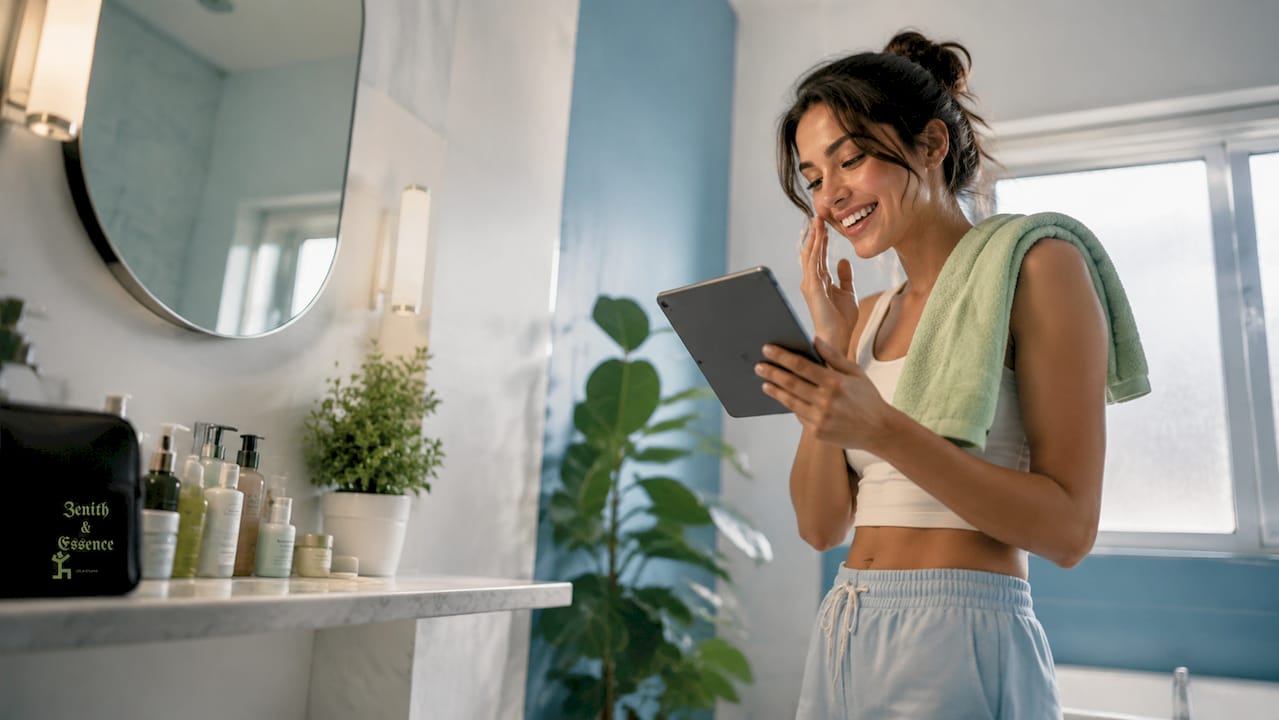
AI makeup simulators analyze your face shape, skin tone, and lighting to layer makeup digitally onto your photo. They cannot fully replicate how a product feels or reacts on your specific skin type, but they are remarkably accurate for color and coverage visualization.
Here is a step-by-step process that works:
Upload your photo. Use the high-resolution, neutral-lit image you prepared. Both YouCam and Cliptics accept uploads or allow real-time camera use.
Select a product category. Start with one category at a time, such as lip color, before adding foundation or eyeshadow. Layering too many products at once makes it harder to evaluate each one.
Browse and apply shades. AI try-on tools let you test over 100 shades instantly. Use the comparison feature if available to toggle between two shades side by side.
Adjust for realism. Increase or decrease opacity settings if the tool offers them. A full-coverage simulation may not reflect how a sheer formula actually looks on skin.
Screenshot and compare. Save your top three to five results and compare them in natural light on your screen before making any decisions.
Tool | Best for | Key feature | Cost |
YouCam | Full-face makeup preview | Real-time camera mode, 100+ shades | Free |
Cliptics | Quick shade testing | Fast upload, clean interface | Free |
Influenster | Real user reviews | Community feedback, product ratings | Free |
Pro Tip: Virtual tools empower you to experiment with bold looks you might never try in a store, which is one of the most underused benefits of AI try-ons. Test that deep plum lip or graphic liner before you spend a dollar.
One important limitation: AI tools visualize appearance, not safety. A shade may look perfect on screen but contain an ingredient your skin reacts to. Always cross-reference the ingredient list and check your skin health checklist before purchasing anything new.
How to find and join online beauty product testing programs
Product testing programs give you physical samples to use at home, which solves the one problem AI cannot: how a product actually feels, smells, and performs over time. These programs are legitimate, widely available, and often free to join.
The most trusted platforms in 2026:
Influenster. The largest beauty testing community in the U.S. You complete a profile, connect social accounts, and receive VoxBoxes containing free products matched to your profile. Feedback is submitted through reviews and social posts.
Pink Panel. Operated by P&G, Pink Panel focuses on personal care and beauty. Members receive products and complete surveys about their experience.
PINCHme. Sends free sample boxes monthly. Beauty, skincare, and wellness products are common. Samples are tied to completing a brief profile questionnaire.
TestingTime. Connects users with brands for paid product testing sessions. Some programs compensate testers with rewards, gifts, or early product access, depending on the campaign.
To qualify for campaigns, complete your profile thoroughly and honestly. Platforms match products to testers based on demographics, skin type, and purchase behavior. A sparse profile means fewer matches. After receiving samples, the feedback brands typically request includes written reviews, star ratings, before-and-after photos, and sometimes short video testimonials.
Joining multiple platforms is a common strategy among experienced testers who want access to a broader range of products. There is no conflict in being active on Influenster, PINCHme, and Pink Panel simultaneously.
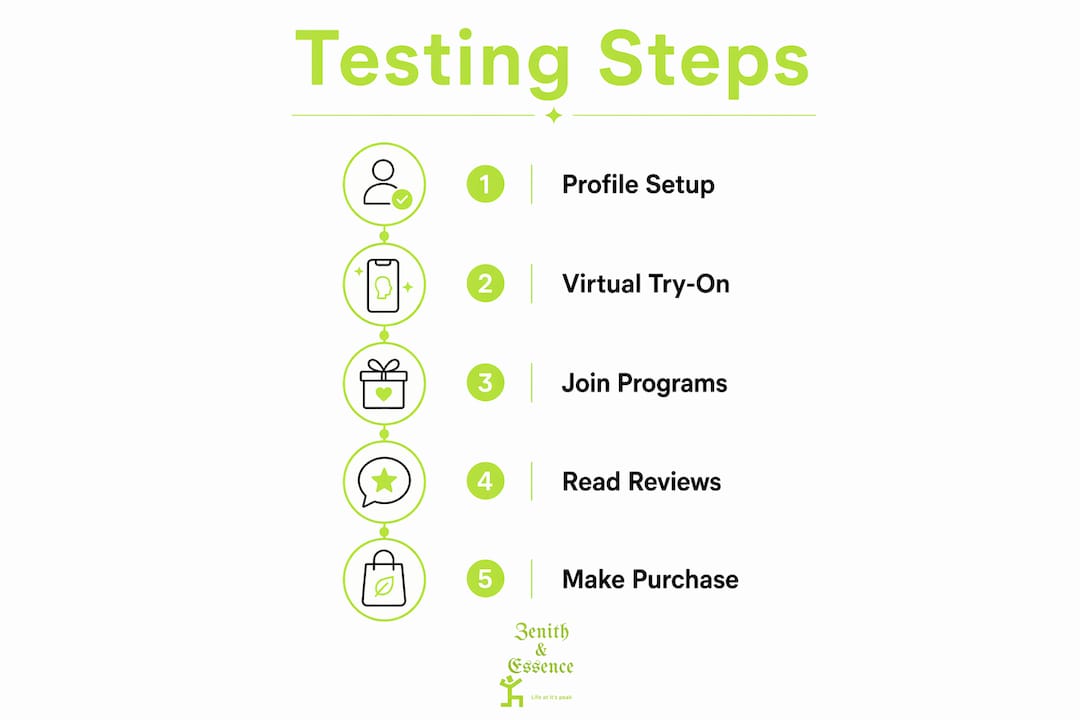
Reading reviews from other testers on these platforms is itself a form of online product evaluation. Look for reviewers who share your skin type and tone. Their experience with a product is far more predictive of your own than a generic five-star average.
Common mistakes to avoid when reading beauty reviews online
The ability to test and review beauty brands online is only as useful as your ability to interpret what you find. Several traps catch even experienced shoppers.
Overreliance on AI visuals alone. A virtual try-on tells you how a color looks, not how a formula performs. AI visualization does not replace ingredient safety checks or clinical efficacy data. Use it as a first filter, not a final verdict.
Ignoring skin type context in reviews. A foundation praised for a dewy finish by someone with dry skin will likely look greasy on oily skin. Always filter reviews by skin type when the platform allows it. If it does not, look for reviewers who mention their skin type in the text.
Falling for fake or incentivized reviews. Incentivized reviews can skew perceptions of product quality significantly. A product with 500 five-star reviews from a single campaign launch week is a red flag. Look for reviews spread over time, with a mix of ratings and specific detail about performance.
Skipping the ingredient list. This is the most consequential mistake. An AI try-on and a glowing review mean nothing if the product contains an allergen or irritant for your skin. Cross-reference ingredients against known sensitivities before you buy beauty products online. Resources like the skincare ingredient guide at Essencezenith break down what to look for.
“Successful online beauty product testing relies on a multi-pronged approach: virtual AI try-ons for visual fit, trusted product testing communities for real feedback, and ingredient analysis for safety.” — Cliptics
Real user feedback combined with AI visualization gives you a far more complete picture than either source alone. The best decisions come from using all three inputs: visual simulation, community reviews, and ingredient research.
Key takeaways
Effective online beauty product testing requires combining AI virtual try-on tools with real user reviews and ingredient analysis, not relying on any single source.
Point | Details |
Prepare your photo first | Use a high-resolution, neutral-lit front-facing image for accurate AI color matching. |
Use AI as a first filter | Tools like YouCam and Cliptics visualize color and coverage but cannot assess formula safety. |
Join multiple testing programs | Platforms like Influenster, Pink Panel, and PINCHme together give you broader product access. |
Read reviews critically | Filter by skin type, check review dates, and flag suspiciously uniform high ratings. |
Always check ingredients | Cross-reference ingredient lists against your sensitivities before any purchase. |
Where AI beauty testing is heading, and what I actually think about it
I have spent years watching beauty technology promise to solve the “buy it and regret it” problem. AI try-on tools have genuinely moved the needle, but the conversation around them tends to skip the part that matters most.
The accuracy of tools like YouCam has improved dramatically. Face shape detection, undertone matching, and real-time camera mode now produce results that are genuinely useful for color decisions. What has not improved is how people use them. Most shoppers test one shade, decide it looks good, and buy. That is using a powerful tool at about 10% of its capacity.
What I have found actually works is treating the AI try-on as a shortlist tool, not a decision tool. Run 20 shades through the simulator, cut it to three, then go to Influenster and read 50 reviews for each of those three. By the time you are ready to buy, you are not guessing. You are confirming.
The other thing most articles will not tell you: the men’s beauty market is catching up fast. Guides like the 2026 makeup guide for men show that AI try-on tools are increasingly being used by a much broader audience than the traditional beauty shopper. The platforms are ready for this. The marketing has not caught up yet.
My honest advice: use AI tools to get comfortable with color, use review communities to understand real-world performance, and use ingredient databases to protect your skin. That combination beats any single source by a wide margin. And if you want to skip the guesswork entirely, start with brands that build transparency into their product pages from the start.
— Norman
Discover premium beauty products you can trust at Essencezenith
After you have tested shades virtually and read through community reviews, the next step is finding products that are worth purchasing. Essencezenith curates a selection of sustainably sourced beauty products, including certified organic facial oils, night creams, and Korean beauty soaps, each chosen for ingredient quality and real-world efficacy. Every product page includes genuine customer feedback so you can review top-rated products before adding anything to your cart. Essencezenith also backs every purchase with a 30-day satisfaction guarantee, so if a product does not perform as expected, returning unused items is straightforward. For a closer look at one of their standout formulas, the certified organic facial oil from BYMANYC New York is a strong starting point. You can also explore affordable skincare solutions to build a routine that performs.
FAQ
What is the best free tool to test makeup online?
YouCam and Cliptics are the most widely used free AI makeup try-on tools. Both offer full-face simulations with over 100 shades and require only a photo upload to get started.
How do I qualify for free beauty product testing programs?
Complete your profile thoroughly on platforms like Influenster or PINCHme, including skin type, tone, and purchase habits. Detailed profiles generate more campaign matches and increase your chances of receiving free samples.
Can AI try-on tools replace physical product testing?
No. AI tools accurately simulate color and coverage but cannot replicate texture, scent, or how a formula reacts on your specific skin type. Physical testing through sample programs remains necessary for a complete evaluation.
How do I spot fake reviews when shopping for beauty products online?
Look for reviews spread across multiple months, written with specific product details rather than generic praise. A cluster of five-star reviews posted within days of a product launch is a common indicator of incentivized or coordinated feedback.
Is it safe to upload my photo to AI beauty tools?
Reputable platforms like YouCam publish clear data policies. Read the terms of service before uploading, and prefer tools that process images locally or delete uploads after the session ends.
Recommended
Comments